Pages

Friday, April 11, 2014

Wheat Belly: Davis


Dr. William Davis, MD, is a cardiologist that has been advising his patients for several years to try a gluten elimination diet for 30 days to see if that might have a beneficial effect on their symptoms. In the introduction to his book, he remarks that if we look through old photo albums of our grandparents, we rarely see instances of obesity. Women "in the old days," didn't exercise -- it wasn't considered "lady-like!" So how did they stay so thin when that is the exception today.

As we know, obesity has become an epidemic. Although there are many approaches to addressing this issue, most of them are short-lived and prone to long-term failure. Like Dr. David Perlmutter in Grain Brain, Dr. Davis believes it is largely due to our over-reliance on wheat in our modern Western diets, and that today's wheat is not the same wheat as that of our grandparents.

Wheat Belly provides an abundance of medical evidence for his premise. Rather than repeat that here since it is very consistent with that presented by Dr. Perlmutter in Grain Brain, I will instead refer you to a review of Grain Brain. Grain Brain provides valuable insights into how Dr. Perlmutter arrived at his conclusion on the negative impact that all grains have on our brain.

Medical Information
There are a many sources of medical information. Western medicine is highly successful at treating acute injuries and acute illnesses because it's fairly straight-forward to detect the results of a theory: the patient either improves in a relatively short period of time or they do not.

Chronic illnesses and the modern conditions that are the major cause of death in Western countries are much more difficult to treat because the damage done by chronic conditions often builds slowly over many years until the problem becomes irreversible. Auto-immune conditions associated with chronic inflammation are currently believed to be the major cause of most chronic diseases such as coronary artery disease, stroke, and neuro-degenerative diseases such as Alzheimers -- today's leading causes of death. Our success at treating acute illness and injury has greatly extended our life expectancy; emerging knowledge of the cause of chronic illnesses is likely to play an even more significant role in extending our productive lives even further.

When you are exposed to medical advice, whenever possible, you should consider the source of the advice -- especially when it is for chronic conditions. How does the presenter "know" that the advice is sound. Four popular methods for establishing medical advice are:
  • Theories. Theories are the least mature of the methods. Theories from a knowledgeable medical authority often eventually result in new knowledge, but theories are just that: unproven hypotheses. As we have seen in dietary advice over the past fifty years, they are often completely incorrect and actually damaging to our health. 
  • Population Studies. Populations studies seek to understand the differences between populations that have escaped particular maladies and populations that have not, generally relying on statistical evidence to support their conclusions. Unfortunately, population studies cannot establish anything other than a loose connection; i.e. can not establish a cause and effect, nor do they uncover the metabolic mechanisms that might be the underlying cause of the issue. A number of notable population studies, such as the China Study, have come under scrutiny, years after having established nutritional dogma, due to misinterpretation of aspects of the original results. Ancel Keys' Seven Countries study cherry-picked the countries he used to prove his misguided association between cholesterol and coronary artery disease that has had a profound impact on dietary guidelines for over fifty years. 
  • Clinical Trials. Clinical trials are beginning to get into the area of "true science." Using a number of proven scientific techniques (such as double-blind studies), clinicians attempt to establish some aspect of a medical condition through studies on animals or humans. Some of the difficulties in reaching definitive conclusions with clinical trials include the complexity of our metabolism -- which varies considerably between individuals -- and the number of uncontrollable variables in the subjects' underlying DNA, environment, personal habits, etc. Animal studies -- especially the infamous "rat studies" -- meant to provide insights into human metabolism are often inappropriately related to results in humans and in the past have often used dosages well beyond reasonable ingest rates -- often orders-of-magnitude beyond!
  • Practitioners. As a layman, I've actively studied the health landscape for several decades and personally believe that the most effective source of good medical advice comes from dedicated medical practitioners and the knowledge they gain from "practicing" their theories on their patients. That information is effectively communicated by the publication of their case studies.

Dr. Davis' Case Studies
Dr. Davis' case studies, spread throughout the book, are a source of inspiration. The theory underlying Wheat Belly is important, but the real proof lies in the amazing benefits realized by everyday people like you and me. Most of the case studies are one or two pages, so I'm just summarizing here. I'm sure you'll find the additional details from the book to be valuable.
  • Dr. Davis performed a clinical trial of one on himself! Knowing he has a wheat sensitivity, he wanted to find out if there were a significant difference between ancient wheat and modern wheat. With some effort, he was able to obtain two pounds of einkorn wheat from which he ground the grain into flour. He prepared and ingested four ounces of einkorn one day followed by four ounces of modern organic wheat the next. The results were extremely interesting. From einkorn: no perceptual effects. From modern wheat: nausea (almost losing his lunch) and queasiness for thirty-six hours, accompanied by stomach cramps, fitful sleep, brain fog, and difficulty focusing on the research papers he was reviewing. Blood sugar readings before each test: 84 mg/dl. Blood sugar after einkorn: 110 mg/dl vs. 167 mg/dl for modern wheat. Results: significant difference!
  • At sixty-one Celeste's weight had ballooned from 120-135 in her twenties and thirties to 182. Dr. Davis recommended a wheat elimination test to see if that were the cause. After three months, she had lost twenty-one pounds. After fourteen months, she had returned to her "twenties" weight of 127, having lost fifty-five pounds including twelve inches off her waist and fitting into size 6 dresses again.
  • At 5 feet 10 and 322 pounds, Geno was diabetic with poor blood readings and at serious risk for heart disease. After six months eliminating "healthy" whole grains, he had lost sixty-four pounds and fourteen inches off his waist. Previously lethargic, he felt he now had the renewed energy of his youth. After another six months, he lost another forty more pounds, a total of 104 in a year.
  • Wendy suffered from ulcerative colitis for over ten years, severe enough at times to require blood transfusions. She was on three prescription medications when she met Dr. Davis in preparation for colon removal surgery, replacing it with a permanent ileostomy bag worn around her waste for solid waste removal. Although he offered no assurances, Dr. Davis suggested she try gluten elimination for four weeks as a last ditch effort to save her colon. Three months later: no ileostomy bag, thirty-eight pounds of weight loss, and an almost complete elimination of symptoms. After a year off gluten -- totally cured. Although Wendy had tested negative for celiac antibodies over the years, it would appear that she was gluten sensitive, as many of Dr. Davis' patients have repeatedly demonstrated.
  • Jason is a twenty-six year old that came to Dr. Davis in preparation for a possible heart-replacement surgery. "Everything hurts. All my joints. I can barely walk. At time I can barely get out of bed." Jason had been treated by three rheumatologists to no avail. Dr. Davis suggested wheat elimination for four weeks. Jason reported that after five days the pain was completely eliminated. He tested by eating a sandwich and within five minutes, 80% of the pain returned. After three months, Jason showed no signs of heart failure. He was now able to jog short distances and play light games of basketball -- activities not possible for several years.
This is just a brief summary of case studies to whet your appetite! You will be rewarded by many that I have omitted in order to get your attention. Dr. Davis' unique approach to supplying the scientific evidence is also worthy of mention and provides some of the important new healthy-diet information that has recently started to be uncovered. If you're now intrigued by the science behind Wheat Belly, read the review on Grain Brain, in which I've focused more on the science in the book rather than the case studies.

Saturday, January 25, 2014

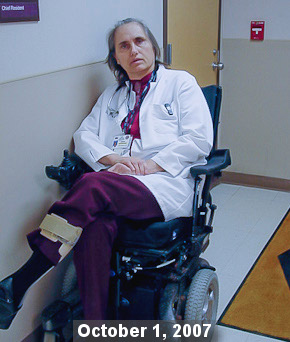
Dr. Terry Wahls, M.D.

I first saw Dr. Terry Wahls, M.D., on a Bulletproofexec event and was amazed at her brilliance and
her story. Dr. Wahls was a former national Tae Kwon Do champion that contracted multiple sclerosis (MS) in later life. Her illness progressed over several years to the point where she was confined to a reclined, motorized wheelchair and her condition was degenerating.

She began a series of self-experimentations to see what she could do to slow the progression of her condition and along the way, found a cure! [Well, technically, not a cure, but effectively so!] She shares her story through the foundation she established, The Wahls Foundation, in order to help others.

Her book, Minding My Mitochondria, is the story of how she defeated MS, accomplished completely through dietary changes based on studying the latest research on improving neurological function -- the seat of her MS problems. Through a series of incremental changes, she ended up at the modern paleo diet: fresh fruits and vegetables, healthy fats, grass-fed meat -- gluten and casein (milk protein) free.

She went from her motorized wheelchair to walking with two canes for short distances. Then to using a single cane. After a few months, she found she could ride her bike around the block at home. She is now participating in 18 mile bicycle races.

This video is a couple of years old so this is not bleeding edge information, but if you're still on the fence about the modern paleo diet and are still confused about the conflicting nutritional information we get from the medical establishment, you really need to watch it! I was so inspired that I just had to share it :-).

Doctor Cures Her Multiple Sclerosis With Diet, Abandons Wheelchair

SALT Your Way to Health: Brownstein

Salt is one of the most misunderstood nutrients. Dr. David Brownstein, M.D. and holistic medicine practitioner, sets the record straight on our need for salt in Salt Your Way to Health.

We have heard from the medical establishment for years that salt is bad for your health and we have been told to eat a low-salt diet. This is not only incorrect information but potentially dangerous.
  • Table Salt vs. Unrefined Salt It's critically important to understand the difference between refined table salt and unrefined forms of salt such as sea salt or Himalayan pink salt. Table salt is an industrial compound with little nutritional value beyond the manufactured sodium and chlorine while sea salt has over 80 additional trace minerals that are important to your overall health. Dr. Brownstein recommends that you avoid table salt and provide your body the salt it needs with 1/2 to 1 tsp per day of unrefined salt.
  • Dietary pH It is also important to understand the importance of the aggregate pH of the foods that you eat and their effect on your body. The body requires a pH of 7.2 and the body organs will insure that no matter what you eat, it will maintain your blood plasma at a pH of 7.2, virtually at all costs. Junk foods in general have an acidic impact and must be offset by alkaline foods that are high in mineral content. Our "natural" (or paleo) diet consists of whole foods that include meats, which are somewhat acidic, balanced by the alkalinity of healthy fruits and vegetables. 
  • Table Salt is Acidic A simple experiment shows that a teaspoon of Celtic sea salt raises the pH of 1/2 cup of filtered water by 0.4 (makes it more alkaline) while refined salt lowers it by 0.4 (makes it more acidic).
  • The SAD is Acidic The Standard American Diet (SAD) -- high in processed foods, sugars, and refined salt -- is highly acidic. The body needs minerals to offset this acidity, often leaching calcium from bones -- a common cause of osteopenia and osteoporosis in older men and women.
  • Sea Salt Production Process Production of sea salt is an ancient process that involves drying sea water in the sun to produce brine -- a process that retains the dozens of minerals inherent in sea water. Magnesium and potassium, two minerals crucial to our health, are included in significant quantity in sea salt. 75% of Dr. Brownstein's patients are deficient in magnesium and most Americans are potassium deficient, so sea salt is beneficial to your health.
  • Sea Salt is Heart Friendly A quoted study showed that participants with the lowest salt intake had over four times the incidence of heart attacks as those on the highest salt intake. So more salt rather than less salt is good for your heart!
  • Minerals are Important Studies have shown that deficiencies in minerals such as calcium, potassium, and magnesium are directly related to the development of hypertension and heart disease.
  • Cellular Electrolyte Balance The sodium in salt is a critical part of electrolyte balance in and around our cells. Sodium outside of the cells is balanced against potassium inside of the cells and various metabolic processes move ions through the cell walls. Calcium and magnesium also play a role. Insufficient sodium in the extracellular space causes dehydration and acidosis on the inside of the cells -- even if water consumption is at adequate or high levels. The kidneys will work extra hard to try to hold onto the salt available -- over time, causing kidney problems. 
  • Adrenal Impact of Refined Salt Chronic use of refined salt will impact the adrenal glands because it is lacking in the needed support minerals.Unrefined salt solves these problems.
So how did we get to where we are today: saltophobia
  • Animal Studies The first reported relationship between salt and high blood pressure came from a study in 1904. For the next 50 years a series of (flawed) animal studies seemed to confirm these early reports. The animal studies predominantly used massive dosages of refined salt -- 10-20 times recommended dosages. When the salt was eliminated from the diet, the lowering of blood pressure was considered the proof that salt was bad. See my blog on the Intersalt Study for a detailed case study. 
  • Human Studies Clinical trials on human subjects studying the relationship between salt intake and blood pressure shared two obvious and common flaws: (1) always used refined salt; and (2) did not consider the logical effect of the minuscule differences observed. In studies involving Caucasian subjects, the lowering of pressure averaged 1.27 mm Hg systolic and 0.57 mm Hg diastolic -- insignificant in patients with dangerous BP's in the 200 mm range. In one study involving African Americans, the results were 6.44/1.98. As a layman aware of these "findings" years ago and the imperceptible affect of alpha and beta blockers on my own blood pressure, I discontinued use of pharmaceuticals on my own.
A number of interesting case studies of Dr. Brownstein's patients illustrate the importance of understanding how low-salt diets cause dramatic problems that are easily corrected. These "snapshots" are but a sampling and abbreviated to give you a quick overview. The actual case studies provide additional, important details that you'll get from reading the book!
  • Sue, 61, had food allergies so severe that she reacted to virtually everything she ate including vitamins. Upon testing, it was determined that the pH of her urine was very acidic and that refined salt made it more acidic. When she replaced refined salt with Celtic Sea Salt, her pH significantly increased (became less acidic) and her food allergies went away.
  • Jack, 63, was treated for hypertension for seven years with a diuretic and beta blocker and felt terrible: low energy, low initiative, and severe brain fog. Since his other doctors told him to lower his salt intake, he had completely stopped using salt. Jack tested low on sodium, so Dr. Brownstein added minerals and unrefined salt to his diet. Within one week his head began to clear and after two months he dropped one blood pressure medication and reduced the dosage of the other by half.
  • Barbara, 53, was shocked when her doctor told her that her blood pressure was 160/100 and was told she would have to take antihypertensive drugs for the rest of her life. Barbara avoided "salt at all costs because I thought it caused hypertension." Barbara tested low for sodium and was put on vitamin and mineral supplements and told to add 1/2 tsp of unrefined salt per day. Within two weeks her blood pressure had declined and within two months it was at 110/70. She is not on medication, sleeps better (and less per night) and feels much better.
Dr. Brownstein proves to my satisfaction the importance of adequate unrefined salt to our diets. If you are still skeptical because of our saltophobic brainwashing over the decades, please pick up a copy of his book so that you can examine the evidence in greater detail.

Monday, January 20, 2014

Iodine, Why You Need It: Brownstein

Dr. David Brownstein, M.D., is a Board-Certified family practitioner who approaches medicine from a holistic perspective. I've been following Dr. Brownstein's blogs for several years and very much like his preference to treat the cause of dysfunction rather than the symptoms. 

Iodine: Why You Need It: Why You Can't Live Without It provides important information to help resolve the common misconceptions around this important micro-nutrient. Dr. Brownstein and his mentor, Dr. Guy Abraham, have been singular voices for several decades on the heath impacts of iodine deficiency. This book provides the medical evidence for their findings and a straight-forward program for resolving the issue.

Importance of Iodine
Why is iodine important?
  • Goiters A several shortage of iodine causes thyroid problems, resulting in the growth of goiters.
  • Mitochondria ATP Iodine is involved in the production of ATP in the mitochondria of every one of our trillion+ cells. An iodine deficiency results in inadequate energy production needed to drive most of our metabolic processes.
  • Thyroid Hormones Iodine is critical to proper thyroid functioning. The 1, 2, 3, and 4 in the thyroid hormones, T1, T2, T3, and T4 are -- guess what? -- iodine!
  • Thyroid Disorders The rising incidence of the thyroid conditions of Hashimoto's disease and Graves' disease tracks along the same curve as our falling iodine levels. Dr. Brownstein estimates that 15-20% of the population is affected by autoimmune thyroid diseases.
  • Bio-Availability To become bio-available, iodine must undergo two processes: oxidation and organification both of which require co-enzymes, particularly adequately levels of vitamins B2 and B3, so proper treatment in some cases requires additional dietary changes or supplementation. 
  • Organification Organification of iodine simply means that it is bound to other organic compounds such as cholesterol, lipids and proteins. Organification requires iodine levels at 100 times the RDA levels in order to occur. At 100x RDA levels, iodine forms delta-iodolactone, a key regulator for apoptosis, and is an important anti-thyroid cancer agent. 
  • Breast Issues Teenage girls are particularly susceptible to goiters because development of breast tissue puts additional iodine demands on the body which further depletes thyroid iodine levels.
  • Low IQ Births It has been known for nearly 100 years that iodine deficiency in pregnant women is associated with low IQ births. Cretinism is the most severe form of iodine deficiency, first discovered in the 18th century.
  • ADHD and Autism Dr. Brownstein makes the case for connections between ADHD and autism in children and iodine deficiency. "I do not believe that ADHD is a condition caused by a lack of a mood-altering drug such as Ritalin or Concerta. I believe ADHD is a condition caused in large part from nutritional and hormonal imbalances as well as an increased toxic load." 

Iodine Deficiency: An Epidemic Problem
Dr. Brownstein claims that there is an epidemic iodine deficiency problem. What is the evidence that you are likely to be iodine deficient?
  • Dr. Brownstein tests iodine levels in all of his patients -- over 6,000 to date -- and 96% test low, and many below any detectable limit. 
  • Hakala Research (referenced in the book) has tested tens of thousands around the world with similar results.
  • Elemental iodine exists primarily in the oceans. Iodine enters our food chain through evaporation from the oceans where it is deposited in the nearby soil and absorbed into plant life. Areas of the world that are not near the ocean tend to be iodine deficient. In Dr. Brownstein's locale -- the mid-West -- glaciers removed most of the iodine in the soil and was the "epicenter" of a goiter problem that was identified in the U.S. in the early 1900's. The end result was the addition of iodine to salt ("iodized salt") in Michigan and Ohio, quickly followed by the rest of the country.
  • The World Health Organization estimates that one-third of the earth's population live in iodine deficient areas, resulting in mental retardation, goiter, increased child and infant mortality rates, and socioeconomic decline.
  • Iodine was added to salt to reduce the goiter problem in the early 1900's, but the misdirected movement to "saltophobia" has resulted in a decline of 50% in the past 40 years per the NHANES studies. Note that iodized salt is an industrial, unhealthy substance and should not be consumed because it is missing the 80 minerals normally found in raw sources such as sea salt.
  • Iodine is a part of the chemical family known as the halogens, which occupy Group VIIa in the periodic table of the elements. The metabolic need for iodine is so great that the body will substitute other members of the halogen family if there is an iodine shortage. Flurorine and bromine which are both toxic compounds, replace iodine in deficient individuals, causing metabolic problems. When iodine levels are restored to normal, the body quickly replaces the toxic fluorine and bromine with iodine and excretes them through the urinary tract. Dr. Brownstein provides the medical evidence for this through test results with his patients and through research studies.
  • Iodine was added to bakery products in the 1960's to condition bread. This added a significant amount to the average iodine intake as each slice of bread included 150 mcg. Ten years later, due to iodophobia, bromine -- a toxic substance with no biological value -- replaced iodine in bread products further exacerbating the iodine deficiency problem. 
The body needs two forms of iodine: elemental iodine and iodide -- the ionic form of iodine found in salt. The metabolic processes to convert between them are not efficient, so Drs. Brownstein and Abraham have found that supplements including both are needed in order to correct iodine deficiency. Dr. Brownstein also recommends the use of 1/2 to 1 teaspoon of sea salt per day to his patients.

Iodine Testing
The most accurate iodine test was developed by Dr. Abraham and test kits are available over the internet. The test is called the iodine elimination test: 50 mg of iodine are ingested and urine is collected over a 24 hour period. If your body has adequate iodine levels, most of the 50 mgs are passed in your urine. A "normal" result is to eliminate 90% or more of the iodine.

I was tested through Hakala Research and tested deficient at 72% (>90% normal). As an interesting sidenote, I believe that I experienced a 36 hour increase in energy levels from the single LugoTab (50 mg of iodine/iodide) taken as part of the test and I have ordered LugoTab supplements! Check back for an update after I've had time to evaluate the results!

Case Studies
This is a small subset of case studies of Dr. Brownstein's patients whose quality of life was dramatically improved through treatment with iodine supplementation. Case studies in the book provide much more detail than presented below, making them much more compelling, so check the book if you'd like to drill down further.
  • Kevin, 31-years old and a weight-lifter, became disabled after a flu shot and was diagnosed with hypothyroidism. Kevin's elimination test showed iodine deficiency at 55% elimination (normal > 90%). After a change in thyroid medication and iodine supplementation, he noticed an immediate improvement.
  • Paula, age 42, suffered from severe headaches for over ten years and was diagnosed with hypothyroidism. Treatment with medications provided some relief. Her iodine loading tested below the detectable limit (0%). 37.mg/day of Iodoral showed improvement in two weeks. After running out of Iodoral in two months, her headaches returned. Re-supplementation again resolved the problem and confirmed that iodine deficiency was the cause of her headaches for all of those years.
  • David, age 42, ate a healthy diet, supplemented with vitamins, exercised regularly, and felt reasonably well during his 8-year treatment for hypothyroidism. He was surprised that his iodine loading test was very low at 46%. After three months of supplementation with Iodoral, David's energy levels had increased dramatically and his test results had increased to 87%. David is Dr. David Brownstein!
  • Tracy, 40-years old, was treated for Hashimoto's disease for ten years and felt miserable: brain fog, poor memory, extreme fatigue, heart palpitations, irrititability, moodiness, and insufficient energy for working out. Incremental improvements occurred under Dr. Brownstein based on a change in thyroid medications, a gluten-free diet, and vitamin/mineral supplements. But she did not feel completely well until her iodine deficiency was corrected.
  • Marlene, a 45-year old advertising executive, was diagnosed with Graves' disease. Her physician wanted to treat her with radioactive iodine, so she sought another opinion. She was tested at 24% excretion for iodine (>90% normal) and found to have nutritional deficiencies. After four weeks on an improved diet, supplementation, and 50 mg/day of Iodoral (iodine/iodide supplementation), she noticed a dramatic improvement in her symptoms and energy levels.
  • Joan, a 60-year old teacher was diagnosed with breast cancer in 1989. Using holistic medicine and iodine supplementation and treatment for hypothyroidism, she recovered and continued to teach for 16 years until the tumors metastisized, at which point she became very fatigued. She lost 25 pounds and "I felt like I was dying." Dr. Brownstein increased her iodine supplementation to 50-62.5 mg/day. Her tumors began to disintegrate (PET scan) after 42 days and she was also able to stop the thyroid medication.
  • Delores, a 73-year old woman, was diagnosed with breast cancer. She refused chemo and was treated by Dr. Brownstein with 50 mg/day of Iodoral, vitamins, minerals, and hormones as well as Celtic Sea Salt. She felt significant improvement in three months. The breast cancer was significantly reduced after 18 months and after two years, her mammograms and ultrasounds were normal.
Medical Iodine Controversy
The medical establishment does not yet recognize the significance and importance of iodine; in fact, medical schools are still teaching that iodine is toxic despite the fact that this was disproven decades ago. If you plan to discuss this issue with your physician, you might want to read Dr. Brownstein's book to arm yourself ahead of time!

Closing Observations
Iodine, Why You Need It, Why You Can't Live Without It was an eye-opener for me and prompted me to have myself tested. Dr. Brownstein provides a compelling case that many, if not most of us, are iodine deficient, what the impact of that deficiency is, and simple steps in how to treat it. If the above information is relevant to you or someone you know, you can order copies of the book from Amazon and other book outlets.


Friday, December 27, 2013

Grain Brain: Perlmutter

Dr. David Perlmutter, MD, is a board-certified neurologist and a Fellow of the American College of Nutrition, as well as a leader on the use of alternative treatments to neurological disorders according to Dr. Mehmet Oz. Grain Brain: The Surprising Truth About Wheat, Carbs, and Sugar -- Your Brain's Silent Killers pretty much sums up what the book is about! Dr. Perlmutter's appreciation for the value of restricted grain diets came through success in treating his patients, despite the conventional wisdom of the "value" of whole grains to dietary health.

Here are some questions Dr. Permutter's began to ask himself as he came to the above realizations:
  • Why did his patients get sicker when he recommended the "healthy" diet of carbohydrates and polyunsaturated vegetable oils?
  • If a (small) percentage of the population found wheat, barley, and rye to be catastrophic to their digestive systems (i.e., celiac sufferers), what might be the impact on the rest of us?
  • What is the link that often ties disorders of the brain to diabetes?
  • Why do recent studies link increased longevity to high (i.e., "unhealthy") cholesterol levels?
Clearly, many of the dietary recommendations that we've been getting from the medical establishment are, at best, incomplete. Dr. Perlmutter presents his perspective from his medical practice and a host of supporting clinical studies.

Here are some factoids to whet your appetite:
  • To a large extent, neurological conditions of the brain are dietary in nature. Dr. Perlmutter describes Alzheimers as "Type 3 Diabetes."
  • Although there are genetic components to both Type 1 and Type 2 diabetes, it is becoming increasingly clear that the environmental factors are more important than previously thought. Type 2 diabetes (previously referred to as "adult-onset diabetes" until it became epidemic in young people as well) is considered completely controllable and reversible if caught early enough through dietary and lifestyle changes. 
  • As with coronary artery disorders, many if not most neurological disorders are strongly influenced by high levels of circulating glucose in the blood stream over prolonged periods of time.
We know that Type 2 diabetes is caused by insulin resistance -- the inability of our cells to respond to the overproduction of insulin in response to the over consumption of carbohydrates over time. This insulin resistance produces an upward spiral of poor blood sugar regulation, damage to the pancreas (that produces insulin), and eventually, cardiovascular events, stroke, and/or neurodegenerative diseases such as Alzheimers.

So what does this have to do with grains, especially "healthy" whole grains -- in particular wheat? There's a host of evidence contradicting the idea that whole grains are good for most of us, but the following two facts are the most compelling:

Fact 1 The wheat we eat today (Borlaug dwarf wheat) is NOT the wheat eaten by our grandparents nor the wheat discussed in the Bible (einkorn and emmer wheats). Although it can be argued that 10,000 years of human agriculture has not been enough time to adapt our genome (i.e., DNA) to grains, it's largely irrelevant since the wheat we eat today was created in the 1950's in a research project in Mexico, sponsored by the U.S. government. The goal to eradicate world hunger through developing a more highly productive, more disease resistant strain of wheat was largely realized, but without studying the long-term impact on our overall health. Borlaug dwarf wheat, with 42 chromosomes vs. 28 for emmer vs. 14 for einkorn, is as different as pigs to humans -- even more so!

Fact 2 The key issue with insulin resistance is glycemic index -- the level of glucose response in our blood caused by various foods. GI's are referenced against pure glucose with a GI of "100" -- the lower the better. Although we are led to believe that "healthy" whole-grained wheat would have a "good" GI, it is just the opposite. While table sugar has a GI of 68, a Snickers candy bar a GI of 55 and a banana a GI of 54, whole wheat bread tops the charts at a GI of 71. If you track the rise of wheat as a percentage of the Standard American Diet ("SAD") as Dr. Perlmutter reports in Grain Brain, it strongly suggests that wheat is the cause of the majority of our modern dietary and health problems -- especially the obesity epidemic.

But GI is just the beginning! The other major issues discussed in detail in Grain Brain are:
  • Gluten allergies Gluten is Latin for "glue." Gluten is a set of sticky proteins in wheat that give it the desirable properties valued by bakers and processed food manufacturers, used to hold processed foods together. Unfortunately, many of us (estimates from 50% to over 90%) have allergic reactions to ingesting the gluten proteins -- glutenins and gliadins. Daily consumption of wheat results in a chronic immune system reaction to those proteins, resulting in auto-immune diseases such as arthritis, celiac, MS, and many more where the over-stimulated immune system attacks and destroys healthy body tissues such as ligaments and cartillage, bone tissues, organ tissues, skin, etc. Modern wheat has forty times the gluten of grains cultivated just a few decades ago.
  • Glycation Glycation is a chemical process whereby sugars bind to other metabolic substances such as proteins and fats, potentially reducing their biologic value -- or worse. Glycation is the cause of the widely publicized plaques that are the principal problem in Alzeimer's and similar diseases of the brain. Although the body has the capacity to "unglycate" proteins under normal circumstances, the accumulated stress caused by years of uncontrolled blood sugar levels overwhelms its ability to do so.
  • Chronic inflammation Although an important metabolic process, inflammation that is chronic and systemic places undo stress on the body, forcing the our organs to mediate the resulting stress levels. Chronic inflammation can result in organ failure and contributes to auto-immune problems.
  • Leaky gut syndrome Gluten has been shown to be the cause of the leaky gut problem that characterizes celiac disease. Leaky gut allows toxins normally blocked by a healthy gut to "leak" into the bloodstream, resulting in serious immune system responses. It has been shown that many individuals with leaky gut do not exhibit celiac antibodies, but still suffer similar metabolic abnormalities. 
  • Cholesterol There's not enough space here to review the details behind our misguidance on cholesterol; you'll need to read Grain Brain to fully appreciate them! Cholesterol is the basis for all hormonal systems in our bodies and insufficient hormonal levels results in sub-optimal health. LDL cholesterol, in particular, is not bad but is good. The "issue" with LDL and VLDL cholesterol is around oxidized and/or glycated cholesterol -- issues avoided with healthy blood sugar levels, promoted by low glycemic index diets. Current studies indicate that people live longer with higher cholesterol levels when dangerous statin drugs such as Lipitor are avoided
  • Dietary Fats Like cholesterol, our understanding of the value and impact of dietary fats has been almost 100% wrong for several decades. Scientific hubris in thinking we were smarter than nature without a complete understanding of the complexities involved is notable. Now that we are just beginning to understand, some key take-aways are: (1) serum fat levels are primarily caused by dietary carbohydrates -- not dietary fat -- since the liver produces 4 times the amount of fat we ingest on a daily basis; (2) much maligned saturated fats comprise 50% of the cell walls in every cell in our bodies and are critical to proper cell protective mechanisms; and (3) polyunsaturated fats in cooking oils from vegetable sources (i.e., corn oil, etc.) are unhealthy and should be replace with coconut or palm oil.
  • Excess Body Fat Any discussion of health issue would be negligent without consideration of the obesity epidemic in the developed nations. Despite the efforts of many people that watch what they eat and exercise (often excessively), they cannot shed excess body fat -- especially the more dangerous visceral body fat. Recent evidence shows that fat cells are not just store-rooms for fatty acids and triglycerides, but active organs that generate hormones affecting the entire system. Excessive body fat contributes to insulin resistance and the production of inflammatory chemicals linked to cancer, autoimmune disorders, and brain disease. Excess body fat is shed naturally with a ketogenic or paleo diet -- see below.
  • Neurogenesis We were taught that brains cells do not regenerate, but that myth has been dispelled in the past decade. As a neurologist, Dr. Perlmutter was particularly interested in a recent finding based on brain-derived neurotrophic factor, or BDNF. BDNF is a protein expressed by a gene on chromosome 11 -- a key to "neural plasticity" -- which when activated, can reverse memory decline in the elderly. Several things can cause the BDNF gene to activate: (1) exercise; (2) following a ketogenic (i.e., fat-based) diet; (3) calorie restriction; and (4) certain nutrients such as curcumin and the omega-3 fat DHA.
  • Anti-Oxidants Everyone is aware of the importance of anti-oxidants. The simple act of living involves production of incomplete chemical reactions that produce free-radicals -- highly reactive, unstable molecules that if left unresolved, will damage body tissues and DNA. We know that ingesting adequate "anti-oxidants" helps us to resolve these issues -- issues that occur in the mitochondria in every one of the trillions of cells in our bodies. The exciting new-news is the discovery of the nrf2 protein, which turns on anti-oxidant and detoxification pathways in the cell nuclei. Activation can be triggered by oxidation of DHA/EPA, calorie restriction, and dietary sources of curcumin (turmeric), green tea, silymarin, bacopoa extract, DHA, sulforaphane (from broccoli) and ashwagandha.

The Modern Paleo Diet

So, operationally, what can we do with the above information? I think the easiest way to summarize is by understanding the concept of the modern, paleo diet. Paleo diets are not new, having formed the basis for the Atkins diet popularized (and daemonized!) in the 1970's. What's new is our improved understanding of why the paleo diet has been successful for many people and why it is in fact, a healthy diet! Some paleo advocates resist the "diet" label, insisting that paleo is a template for proper eating. "Diet" seems to imply a prescription, while "eating paleo" can be and should be personalized.

The simple idea behind paleo is to think about what foods our ancestors had access to prior to the advent of modern agriculture -- a recent event occurring just 10,000 years ago! Since it takes about 40,000 years for our genome (DNA) to adapt to changes, many modern, man-induced dietary changes are incompatible with our genome. The introduction of grains in the last 10,000 years has not given us time to adapt -- especially the addition of massive amounts of gluten into the Standard American Diet at levels not seen until recently.

For two million years, animal products dominated our "paleo" dietary intake with fats and proteins comprising 60-100% of our calories, depending on the season of the year. Vegetables were often not available in the colder seasons and fruits were used to "fatten up" at the end of the growing season in preparation for winter. The "modern paleo diet" is based on 60% good fats (no man-made transfatty acids like hydrogenated vegetable oils or oils corrupted by frying), 20% good protein sources (preferably grass-fed animals and mercury-free fish!), and lots of fresh (and fresh frozen) vegetables. Although whole fruits (not juices) are healthy, the impact of high fructose levels places a demand on the liver that should be minimized; hence, one apple a day keeps the doctor away -- not a lot more! High-fructose corn syrup is a manufactured toxin that should always be avoided.

Thanks to modern medicine, we are living longer, more productive lives. We are on the cusp of major improvements to the quality of life based on our new understanding of the genome and proteome. The most recent breakthroughs have been occurring in our proper understanding of diet and its impact on health. I do not believe it is an overstatement to say that improper diet and health-style is the cause of the major diseases/conditions affecting life in the developed nations today. The major causes of death -- heart disease, stroke, and diabetes -- are preventable -- a case well-documented in Grain Brain. 

Hopefully, the summary presented above will catch your attention. If you've weary of being innundated with yet another trendy idea on how to eat, please do not stop here. I've been on a quest to understand the impact of nutrition and diet on our health for two decades -- as confused as everyone else -- and I believe firmly that we are now beginning to make true progress. Grain Brain is one very good example of an excellent blend of science that we can understand with common-sense advice on how to work our way to a dramatic improvement in our quality of life. I personally have been practicing some of these ideas for years with very beneficial effects, but without understanding the science behind them. I am now more motiviated to continue based on this new understanding of our species! If you are intrigued, I would highly recommend that you read Grain Brain.

Another key book published in 2013 on the topic of wheat auto-immune issues was Wheat Belly, written by a cardiologist with similar experiences to Dr. Perlmutter in his practice. Click here to compare notes!

Saturday, September 28, 2013

3 Minutes to a Pain Free Life: Weisberg

Many if not most of us experience chronic pain at least some of the time. But what is chronic pain? What causes it and what can we do to overcome or prevent it? Providing a solution to chronic pain is the purpose of 3 Minutes to a Pain Free Life.

Dr. Joseph Weisberg, P.T., Ph.D., runs a private practice for treating chronic pain -- back pain, headaches, joint stiffness, or arthritis. Contrary to the natural inclination to think that joint pain is from the joint itself, in the vast majority of cases, it is from strain induced in the soft tissue: the ligaments and tendons in the joints.

Acute pain is usually relatively short-lived and the result of trauma, while chronic pain is recurring pain that is the result of the accumulation of the stresses brought on by micro trauma. Dr. Weisberg provides checklists to help you distinguish acute pain from chronic pain. For acute pain you should contact a medical practitioner; don't attempt to resolve acute pain issues on your own.

When you compare chronic pain to more stealthy medical conditions such as coronary artery disease or cancer, you realize that chronic pain has an up-side: it makes you aware that something is wrong. Unfortunately, we generally believe that we need to "baby" the body part that is the source of the pain -- which is advisable for acute pain -- but for chronic pain, that's exactly the wrong approach! Movement is needed to treat chronic pain, but it requires the correct movements to effect healing over time.

Chronic pain is largely the result of bio mechanical dysfunction from tight, stiff or short muscles, weak and imbalanced musculature, lack of lubrication in the joints, misalignment of joints, and/or poor posture. These dysfunctions cause stress on the body mechanics that cause the body to get out of balance, resulting in the continual micro traumas that eventually lead to chronic pain.

Possibly the biggest cause of chronic pain, much to my surprise is the chair! Chapter Two, cleverly titled "The Chair is the Seat of all Evil" explains the history and bio mechanical problems caused by the chair, ergonomic or not! Exposed is the myth that our evolution from quadrupedal to bipedal is the cause of back pain, Dr. Weisberg explains the marvel of the back's S-curve and what an amazing engineering design it is, resisting both gravity and shock that might otherwise damage it. Prolonged sitting has the effect of working counter to the design of our entire musculoskeletal system. [Hint: get up and walk around at least once every hour.] Conversely, moving, standing and squatting are naturally beneficial to the system, relieving tension and lubricating the joints. Although devised several thousand years ago, the chair did not come into common usage until the last 150 years -- not enough time for the evolutionary changes needed for the body to adapt to it. The archaeological evidence is presented that supports this premise!

3 Minutes to a Pain Free Life consists of three parts, each section with a hundred pages of information. The first part is an anatomy lesson in how the body is designed to work, while parts two and three provide exercises along with how, why, and when to perform them. I've been exposed to many exercise programs in the past, but was left without a firm knowledge of why they were important, and without immediate results, tended to stop performing them at some point. Dr. Weisberg's in depth explanations of the importance of this program to your overall well-being provides the science behind the program that helps you to persevere.

The main program consists of six exercises that are performed for 30 seconds each and done at least once a day. The exercises are designed to stretch, lengthen and strengthen the muscles that otherwise get out of alignment and cause the microtraumas that are the source of the pain. Rather than "No pain no gain", the catch phrase is "Work to the pain, not through the pain," allowing the muscles to relax and return to their normal length. Stretching for more than a few seconds is required because the muscles resist this stretching in the same way that they continuously stress to produce the chronic condition. The key to the physiology of overcoming this reaction is that the muscles cannot maintain that tension in a stretched state for more than a few seconds, so the 30 second exercises teach them to relax and return to a normal state.

I have several sources of chronic pain: my knees, back, and right shoulder. I have a bone condition in my right knee (osteochondritis dessicans) which has had open and microsurgery performed over the past forty years. I tore an ACL and MCL ligament (one in each knee) and have osteoarthritis in both knees. These accumulated conditions can made walking difficult, especially on stairs, and prevent me from running anymore. But as it turns out, my knee pain was the result of two factors: the unavoidable mechanical problems in the knees (only correctable through knee replacement) and the chronic soft-tissue micro traumas. I noticed immediate improvements through the 3-minute exercises in a few days and continuous improvements over several months. I am far from pain-free (due to the mechanical problems) but have resumed normal functioning. I'd like to say my tennis game is great now, but let's be reasonable, this is not a miracle program!

I rarely have back episodes anymore, the one exception being long automobile rides in my BMW M3 -- not the most ergonomic experience. The right shoulder pain due to improper weight-lifting in my younger days and exacerbated by my tennis serve has largely subsided -- enough to allow sleeping on that side at night. Overall, I have to enthusiastically endorse The Weisberg Way and the overall improvement in quality of life that it has provided. It's available on Amazon for under $15. If you try the program, please post your experience here to benefit others!


Sunday, September 22, 2013

Blink: Gladwell

blink, The Power of Thinking Without Thinking, is about intuition, how it works, and how to refine this capability by an improved understanding of the brain's decision-making process. As a master story-teller, Malcolm Gladwell makes his case through a series of extremely interesting, inter-related examples of successes and failures of this process.

Gladwell refers to our brain's ability to make these impromptu decision as thin slicing, a term from psychologist John Gottman at the University of Washington, who has done extensive research on married couples by studying their facial expressions. Gottman relies on the work of Drs. Tomkins and Ekman, who discovered that our personal interactions are laced with microexpressions that expose our true feelings. They painstakingly codified the basic microexpressions and their combinations while divining their true meaning. Microexpressions are just one portal into thin slicing and helps us to understand our unconscious analytics machinery.

As noted in On Intelligence, one of the principal functions of our brain is to identify patterns in the stream of information fed to it from our primary sensory organs -- sight, sound, taste, touch, and smell -- and our secondary senses -- balance, acceleration, temperature, kinestheics, pain, time, and more! This pattern-matching capability operates in fractions of a second, below the conscious level. We form opinions on matters and often are unable to understand how we arrived at them. blink helps us become better at figuring that out!

Some examples of thin slicing from blink:

  • A kouros statue from the 6th century B.C. was sold to the Getty museum in New York for $10M over the objections of several art experts that the statue was a  fake. Fourteen months of investigation and scientific research on the statue preceded the sale, but some time afterward, it was confirmed that the kouros was indeed the result of an elaborate hoax. It just didn't "look right" to the experts -- but why?
  • Vic Braden, one of the world's top tennis coaches,  inadvertently realized that he could predict when a professional tennis player was about to double fault in a match, male or female, live or on TV, known or unknown to him! His accuracy was uncanny: typically 19/20 or 20/20 correct predictions. For years he tried to uncover the source of his uncanny ability, but was unable to understand how he did it. It was driving him crazy, literally keeping him up at night! Through the use of high-speed video analysis, he was able to uncover his brain's ability to thin slice the visual input.
  • Warren Harding was discovered by Harry Dougherty, a brilliant political analyst, in 1899 and shepherded him to the White House as the 29th President of the United States. By all accounts, Harding was the perfect candidate: tall, handsome, athletic, and confident. Harding died in office and by all acounts, may have been the worst candidate to ever hold that high office. Experts and non-experts alike failed to make the right decision! This was a case of thin slicing gone wrong!
  • Paul Van Riper retired from a very successful career as an officer in the Marine Corps. Van Riper was chosen by JFCOM to lead the opposition forces in a war gaming exercise known as the Millennium Challenge. Millennium Challenge was designed to provide the Pentagon with experience in fighting wars in the new millennium -- the unconventional warfare of the future, driven by technology and information, modeling and simulation of every conceivable military, economic, political, societal, cultural, and institutional possibility. Acronyms for new techniques were rampant. Hundreds of military personnel participated in the exercise over several weeks, pitting the new technology against a battle-hardened field commander who relied on instinct and training for the split second decisions needed in combat. In the end, sixteen U.S. ships lay at the bottom of the Persian Gulf; had this been a real war, 20,000 American troops would have died before firing a shot. Van Riper's seasoned decision-making process allowed his intuition or right brain to function unimpeded in the heat of battle while the overly analytical approach adopted by the Pentagon obstructed this process.
Gladwell studied a number of experts of various stripes, all of which were very interesting. One of my favorites sets of experts were Gail Civille and Judy Heylmun -- professional tasters for the food industry. They could not only identify the ingredients in packaged food, but could often identify the particular factory in which it was manufactured! They used a fifteen point scale to identify over ninety attributes of appearance, flavor, and texture. What's commercially interesting, and interesting to the premise of this book, is the Degree of Difference (DOD) ten-point scale that indicates how different one product is from another, even within the same category of food such as potato chips. The significance is that the buying public will not be able to discern the difference between products if their DOD is low; hence buying decisions will be driven by packaging and brand -- don't bother trying to improve the taste! The key to their blink-ability is that they can understand the conscious basis for their impressions, and recognize the difference between those formed by someone of their expertise vs. those of ordinary people -- very important to the advertising industry.

Overall, the book is outstanding, both entertaining and exceptionally informative. You may need to reread it to get the full benefit, focusing on the meaning behind the cryptic chapter titles, which help to uncover several sub-themes that recur through the book. You will be rewarded with a better understanding of how the majority of our opinions are formed and the basis for most of our actions -- decisions we reach in a blink. You will hopefully learn to question those reactions that need further investigation and better understand the importance of honing your experiences to blink better in the future. Advertising executive, political hopeful, or just an average Joe, you need to read blink!

Sunday, September 15, 2013

On Intelligence: Hawkins

What is intelligence? How do we know things? What is creativity? What is consciousness? These are ideas that philosophers have pondered for centuries, with earliest records from the Greeks.

I have been fascinated with these topics for many years and have searched unsuccessfully for answers. Philosophy books on the topic were too... well, philosophical... and unsatisfying. Books on brain functioning more than ten years old were very interesting, with most of our knowledge coming from brain dysfunction, where direct knowledge of damage to specific brain areas produced consistently serious problems. Neuroanatomy books were helpful in learning about the parts of the physical brain and the associated high-level notions on the role of specific brain parts.

Recent advances in neurophysiology were more encouraging. There is a tremendous body of knowledge around chemical and electrical signaling mechanisms in the axons, dendrites, and synapses of neuron cells. The known details around these mechanisms begin to peel back the layers of how this all fits together. But the very massive detail and complexity of the mechanisms is a barrier to understanding how and why intelligence results from this amazing system. Having read several books on the biochemistry and neurophysiology encouraged my belief that we could answer the questions on intelligence, knowledge, and creativity, but neuroscientists were still unable to provide those insights.

Jeff Hawkins seems to have shared my interests and similar experience, but has applied his insight and resources to posit a theory which he calls the memory prediction framework. To understand how the brain works, you must begin with how and why it evolved -- the biological value of the brain:

  • For millions of years, the animal brain evolved as a mechanism to control behavior in order to increase survivability.
  • The brain accepts input from the senses -- vision, hearing, sensory, olfactory -- in order to drive action through the motor systems. Lion -- RUN!
  • The brain consists logically of two parts: the primitive brain parts that are shared by reptiles, birds, and mammals, and the neocortex, which is exclusive to mammals. Knowledge and memory in insects seems to be stored and persisted in DNA, while higher level animals store information in the neuronal structures in the brain. The neocortex evolved to provide higher level functions on top of the primitive brain, organized in a multi-level hierarchy.
  • Memory allows animals to store experiences perceived from their environment. Learning improves survivability by improving the value of the accumulated memories. Darwinian logic drives this process -- adaptations that improve survivability perpetuate the gene pool.
To understand how this works, some other key ideas are as follows:
  • Sensory inputs are at an extremely low-level. Vision consists of about one million nerve fibers of information while hearing has thirty thousand.
  • In addition to spatial content, all senses (and everything in the brain) has a time dimension -- quite different from modern computer architectures. Vision, which we perceive as static spatial content, always has a time component; in fact, the eyes move in a process called saccades about three times per second to focus on specific aspects of the visual field. We actually cannot discern objects using our sense of touch without moving our hands or feet on or in the object; i.e., our object recognition through our sense of touch comes through a temporal comparison of sensory inputs. The temporal input is used to constantly modify our working model of our environment.
  • Actual cognition occurs at higher levels in the neocortex hierarchy, where concepts are formed. For visual level V1 (which does some pre-processing from the optic nerves), we begin to see lines and edges. At level IT (an intermediate level), we perceive objects such as lions. At higher levels, we develop strategies to deal with our perceptions.
  • The main purpose of the brain is to form a model of our environment, mostly to deal with now but in our evolved state, to also plan for the future. Note that at any point in time, our senses are only aware of a small subset of our environment (e.g., the visual field in front of us) and that our memory model of the overall environment (and our history of related situations) allows us to respond to it in a comprehensive manner. If, for example, you are sitting alone at home and hear a certain pattern of footsteps and associated sounds, you realize that your child has arrived at home without actually seeing him or her, and if you have more than one, which one!
We can now begin to talk about the actual functioning of the brain:
  • As sensory information moves up the cortical hierarchy, it gets refined into generalized, invariant representations. So we can recognize a song in any key even though the input from the auditory tract is totally different. We can recognize a face from close up, far away, tilted, or from the side, even though the pixel representations are totally different. Invariant representations allow one copy of the Gettysburg Address to be used to recite it orally, write it down by hand, or type it on a computer -- even though the mechanics of reproducing it are totally different.
  • As we learn new behaviors and concepts, they get pushed down in the memory hierarchy, allowing higher levels the freedom to cogitate on how we might deal with the object(s) of focus. Note that at birth, we start with a blank slate; i.e., we know nothing. As sensory inputs are received, we store them as raw temporal images until we begin to associate them with our prior experiences and generalize what we perceive.
  • The human brain has about 10 billion neurons with somewhere between 1,000 and 10,000 synapses or connections to each one: roughly 100 trillion synapses. Everything we know and do, including our intelligence, knowledge, creativity, and consciousness is contained in these synaptic connections. 
And finally, the Hawkins memory prediction model:
  • The many levels of the memory hierarchy communicate up and down and left and right.
  • The idea of context is very important. Concurrent neuronal firings determine the context of the situation and how we react, so a loud noise on the 4th of July is normal, but a loud noise in a library would be a cause for concern. 
  • The key to understanding the memory prediction model is the prediction part: the current context causes specific levels within the memory hierarchy to pass predictions down the hierarchy in anticipation of what we expect to have happen next. The feeling we get from surprise (like missing the last step when walking up or down a staircase) is when the predictions do not mesh with the subsequent sensory inputs. Predictions are the essence of understanding -- we do not understand something that we simple observe without having an associated knowledge base that automatically forms predictions.
  • These predictions are crucial to understanding how we function because the predictions make it possible for us to anticipate what is going to happen so that we can automatically adapt. So in driving down the highway, we ease off the gas pedal as we sense that the driver to our right is about to change lanes unexpectedly.
So how does this relate to intelligence? The memory model is constantly updated based on sensory inputs. In the case of action (say, in sports), it is concurrently sending action commands through the motor cortex to adapt to this changing environment. The memory predictions driven down the memory hierarchy (including the motor cortex) are based on invariant representations of similar past experiences. These invariant representations are what we might also call analogies. Depending on how they are applied, they might also be called biases or prejudices. These predictions run smoothly as long as they measure up to the incoming signals; when they do not, something like an interrupt occurs that focuses attention to address the mis-prediction and learning occurs.

An interesting thing to think about is whether we know anything! What we "know" are neuronal associations, largely in our neocortex. These associations are formed based on relationships to past experiences. When we drill down in our knowledge to a lower level -- peeling back the onion -- our knowledge becomes deeper, but I would question whether there are any absolute truths -- only our current memories related to a topic. An example of this is our initial model of the atom based on electrons circulating around a nucleus and how we are still discovering subatomic particulars such as new mesons that peel back the onion even further. Ask yourself what you actually know about electrons, protons, and neutrons, let alone quarks, leptons, bosons, mesons, or fermions!

Jeff Hawkins is an accomplished computer scientist, and many of his insights come from analogies from his original field. It would appear that many concepts from computer science apply to how the brain functions as well.
  • Objects Neurophysiologists have identified a mechanism for objects in the brain. One research study identified the "Bill Clinton" neuron (possibly a series of neurons) in a set of test subjects. Any topic related to Bill Clinton caused the same set of firings in the brain, whether events related to his presidency or Monica Lewinsky. Within a time period in which Bill Clinton is the topic of attention, a series of neuronal firings maintain the context of Bill Clinton.
  • Ontologies Although On Intelligence predates the popularity of topics such as RDF, the semantic web, and ontologies, the memory prediction framework seems to map nicely to the concept of an ontology; i.e., a set of objects and concepts (sets of neurons) that are interrelated through synaptic connections. For an ontology, we map subjects to objects using predicates. 
  • Attributes Based on experience, objects stored in the brain have relationships to many other objects, including "objects" such as colors, textures, belief systems, etc. otherwise known as attributes. Related synaptic connections that are not currently firing, may fire later when some other aspect of the context increases the action potential of the appropriate synapse(s) to exceed the firing threshold . 
  • Algorithms Although there are many differences in brain cell types, there are also great similarities. Essentially, the process that the brain uses to grow and wire neurons is driven by our DNA and is the same process for all brain cells. There are no unique "hearing" cells vs. "vision" cells or language cells vs. motor cells. The fetal brain evolves from a single bud that grows in packages around something called columns. The cells that grow out of a single "column cell" have long-term relationships to each other through synaptic connections in addition to the extended connections they have to other parts of the brain. The mechanism of growth -- how axons can grow long distances (as much as a meter) to connect to other parts of the body is all handled by the same DNA-driven algorithm. 
There is insufficient space in this review to include the many excellent examples from On Intelligence that help to illuminate Hawkins' ideas. For those of you that may have studied neurophysiology, you'll get hints and references to the research that will make you comfortable that this theory is indeed based on the hard science that we currently understand as well as understanding where he takes leaps of faith in developing his theory. I would highly recommend reading the book in order to fully appreciate the magnitude and impact of these ideas.

Saturday, September 24, 2011

The Tipping Point: Gladwell

The Tipping Point is the book by Malcolm Gladwell that popularized the term. Think about the spread of a virus such as a cold. For a while, you don't feel well, but you're not particularly sick, and then -- suddenly -- you're very sick!

In common parlance, "tipping point" refers to having a product or idea achieve main-stream popularity. Tipping-point ideas invade the collective conscious and change society.

The Tipping Point is about the events that lead up to the all-of-the-sudden part! Tipping points are about ideas that operate as viruses.

Viral ideas were popularized by Richard Dawkins' 1976 book The Selfish Gene which preceded The Tipping Point by four years. Dawkins identified the what -- Gladwell the how. Gladwell applies the tipping point to a wide range of issues such as the militia's response to the outbreak of the American Revolution, the battle against rising syphilis rates in Baltimore in the 1990's, and the clean up of crime in New York City in the same period.

Gladwell's "how" has three primary rules: (1) the law of the few; (2) the stickiness factor; and (3) the power of context. These three laws control the success of the viral outbreaks of ideas.
  • The Law of the Few. When Paul Revere warned the citizens of Boston about the British attack, he mobilized the citizenry to defeat the British in that initial attack. We assume that his "message" was the power that led to that success, but William Dawes set out in the opposite direction and was almost completely unsuccessful. Paul Revere had personal attributes that contributed to his success -- he was both a "maven" and a "connector" -- see below.
  • The Stickiness Factor. For ideas to be successful, they must "stick." For our new ideas, how do we identify, create, and leverage the "stickiness factor."
  • The Power of Context. Good ideas only stick within the right context. How do we identify and mold the context to make ideas successful?
The Law of the Few is about three key personality types that drive the spread of new ideas. These three types are very rare (which is why there are "few" of them!).
  • Connectors. Connectors know everybody!
  • Mavens. Mavens are the innovators that wade through mountains of information to make sense of it. Being a maven requires dedication to an idea or practice and a unwavering obsession. "Pricing mavens" are the easiest to understand: go to them to find out the best price for a commodity! I would suggest that a maven is the person you gravitate to for a specific "thing" -- commodity, idea, scientific principle, etc.
  • Salesmen. Ever bought something from a great salesmen? The experience was very satisfying and a win-win transaction. Salesmen take a maven's idea and popularize it.
So mavens figure it out, connectors spread the word, and salesmen get the word from connectors and then help the rest of us to understand why it matters.

The Tipping Point is a beautifully written book and describes a powerful concept that we all need to be aware of. Gladwell has a gift for sharing new concepts through great examples.

The tipping point is a key concept in successful marketing campaigns as well as political campaigns. You need to read it to increase your effectiveness and to protect yourself from others who may apply the principles to achieve their goals at your expense!

If you liked Tipping Point, I'm sure you'll also like Gladwell's Blink -- a much less successful book on managing your insights. Blink is an equally powerful concept but more universally applicable!

Salt Study No 'Smoking Gun'

Ever wonder where the fear of eating salt came from?
The big push for salt restriction came after a widely publicized 1984 study called “Intersalt.” This study examined more than 10,000 subjects at 52 locations in 39 countries.
Sounds pretty authoritative, doesn't it. How could a study involving thousands of people in dozens of countries yield a result that, according to my personal investigations several years ago, was wrong? Certainly chips and nachos aren't good for you, but is that because of the salt? If the excessive amounts of salt in junk foods is in fact bad (because it upsets the cell's potassium/sodium balance), does that imply that adding salt to your food is bad?
Read the Wikpedia article to see this one example of how seemingly rigorous scientific research can be misinterpreted.
  
ALL of the statistical validation for the Intersalt study came from 4 indigenous populations that ingested low sodium and alcohol and had no obesity in their populations. There was NO correlation between salt intake and hypertension in the remaining 48 populations; i.e. our population. In fact, the data suggested the opposite after accounting for the outlier data!
  
So how does "science" reach conclusions that are not only wrong, but damaging to society? How can I say "damaging" -- what's the big deal about eating less salt? My point is that it potentially has some impact on the economy (perhaps minor in this case), but a greater damage to the culture. I clearly remember the absolute FEAR that was engendered when the Intersalt study results were communicated. What other "facts" that we didn't know about were "killing us?" Study after study after Intersalt on unrelated topics was more confirmation that we needed scientists to save us. That dramatic impact on our society persists in most people today.

Most scientists are well-intentioned. What about the "scientist culture" can lead to such bad results? We have peer-reviews and public scrutiny to prevent failures of this type. Might it be the pressures of the scientific culture? "Publish or perish?" In today's environment, there are significant economic incentives to become an international authority -- book rights, speaking engagements, etc. I was taught that "intellectual honesty" was crucial to science and in my opinion the countervailing economic pressures have neutralized this important principle.

My science, and "thinking" training, was injected with significant doses of skepticism. Unfortunately, the world is getting so complex that we can't run to ground every new rumor and often can't personally interpret the results of every study that is produced, so we need to discriminatingly evaluate based on our background and common sense.

The area of most significance today for applying this chain of logic are fear-based energy policies on an international scale. See the related blog for more details: http://stevekruba.blogspot.com/2010/11/rational-optimist-how-prosperity.html . 

Wednesday, December 15, 2010

DIRECTV Multi-Room DVR Setup

We just had DIRECTV's multi-room DVR -- officially known as "Whole-Home DVR" -- installed. With a new install, I'd imagine that setup might be fairly straight-forward, but with an existing setup, for some (per the message boards), it can be challenging. After attempts by three different installers at getting it to work in our home, I ended up researching the issues and getting it to work on my own. The installers were very dedicated and really worked hard to get things working, but the technical issues and the newness of the technology seemed to be the difficult barrier. I'm documenting the issues we ran into as much for my own benefit (in case I have to do it again!) as to share this experience with others in a similar situation.

We have been a DIRECTV customer for several years, with two high definition DVRs. We bought a new 60" LED high definition TV (awesome!) and decided to replace one of the TVs on an existing DVR and add a high definition receiver for the old TV and move it to the bedroom. It seemed like a good time to add multi-room viewing to our package, allowing us to view any recordings from any of the three TVs. Now that it's working, it's very cool.

Here are some of the salient points to keep in mind when setting up multi-room DVRs:
  • Multi-room requires both a coax connection for video and an Ethernet connection between all receivers/DVRs-- plugged into the Ethernet port on "older" receivers/DVRs. Note: the newest models (H24 and HR24) can piggyback Ethernet on the coax connection (see below) and do not require anything plugged into the Ethernet port.
  • Video is shared on the existing coax cable that is always part of any DIRECTV setup. The new setup uses a single coax to each DVR rather than the two that was previously required.
  • DIRECTV has two options for the Ethernet connection: a standard home Ethernet network or an Ethernet connection running on top of the video coax connection!
  • Multi-room does not require an Internet connection, but DIRECTV provides some additional features if you do have high-speed Internet available in your home. Unfortunately, our neighborhood does not have high-speed and we have successfully networked our TV's without it.
  • The hardware, of course, must be setup correctly. Multi-room requires (I believe) a "blue label" LMB in the satellite dish. DIRECTV is pretty good about the hardware, if you get it from them. They know what you have and will make sure the installer replaces the older LMB if necessary. You also seem to need a single powered SWM to amplify the video coax connection.See http://www.highdefforum.com/directv-forum/92691-what-swm-how-install-request.html for more information.
  • Reboots are the bane of DIRECTV setups. It seems as though you need to reboot after almost any configuration change and you may need to do it for all of your receivers/DVRs. Reboots take several minutes. When in doubt, reboot :-(.
There are two key DIRECTV menus that you need to be familiar with when setting up multi-room. Each of these is off the Menu/Setup/System Setup screen ("Setup" has some alternate names, but you'll figure it out!).
  • Whole Home. If you have a "vanilla" setup, this may where you need to make all of your changes. I'm not sure of that since my setup was not "vanilla."
  • Network Setup. This is where my installation went South. I had "dabbled" in here during the DIRECTV multi-room beta program where the only option for the Ethernet connection was through the home network as opposed to the coax cable.
From the Whole Home menu page, you need to use all three menus:
  • Name Location. Our three receivers are "BM," "FR," and "MBR." You must provide a name each receiver/DVR and they are blank by default.
  • Share Playlist. (Only available on the DVRs).  You must set "Yes" to Share Playlist (No by default) and decide whether you Allow Deletion from "all rooms" or just the local DVR.
  • Status. This is where you go to find out if you have done everything else correctly. It must say "Whole-Home DVR: Authorized" and list at least one Networked DVR. If you only have a single networked DVR (plus one or more receiver), you won't see any networked DVRs from the DVR itself because it doesn't consider itself networked.
I can't speak definitely whether or not you need to do anything with the Network Setup if you're a "vanilla" installation since mine wasn't but the following information will still be useful.

Finally, here are some web sites that might be helpful for you if you're having problems.

Thursday, November 25, 2010

Knee "Sprains" and Injuries

I have a torn ACL in my right knee and torn MCL in my left knee. I've spent time on the internet trying to learn more about how to manage these injuries after having "randomly" attacked the problem with limited success initially. If you're like me, hopefully, some of the information in this article will guide you in the right direction.

The odds are that if you're reading this article, like me, you're not a medical professional and are looking for some guidance as to how to treat your ailment. First and foremost, is to try to gauge how serious your injury is, and that's difficult if you haven't been treated for this particular problem before. Here are some ideas to help you put the severity of the problem in perspective.
  • If you cannot put any weight on the injured leg, this is a reasonably serious injury and you should probably seek medical assistance.
  • If you can walk, even though it is painful, there are a number of things you can do to promote healing. If you think you need medical assistance, do so!
  • Never apply heat to a painful knee immediately after an injury -- always use ice. The regiment is (P)RICE: protect, rest, ice, compression, elevation. Reducing swelling is the main objective. Swelling limits range-of-motion and increases pain. Heat is sometimes helpful 48 hours after the injury when the swelling has subsided.
  • The key to rehabilitation is to increase range-of-motion followed by strengthening. Any activity that increases pain (as opposed to discomfort) is likely to indicate that your rehab regiment is moving too quickly for your injury.
  • It's difficult for an othopedist to treat a swollen knee, so if your situation is manageable, it's important to use (P)RICE immediately after the injury. A severe tear can result in swelling and blood in the knee joint and should be treated by a professional.
The knee is an amazing design. The bones of the knee, the femur and tibia, are held in place by a "matrix" of four ligaments: the anterior cruciate ligament (ACL), the medial collateral ligament (MCL), the posterior cruciate ligament (PCL), and the lateral collateral ligament (LCL). The MCL/LCL hold the knee bones in place vertically while the ACL/PCL protect against lateral and front/back movement. 

The ligaments are listed above in order of most likely injury to least likely injury. The explanation behind why ACL is the most injured and the LCL is least injured is explained in the reference and is fairly interesting.

Knee "sprains" are tears to one or more of the four ligaments (typically one). Injuries have two principal causes: physical contact (usually through contact sports) and twisting injuries caused by magnified forces on the ligaments through an unfortunate jump or movement. Tears are "graded" as grade 1, 2, or 3: grade one being 10% or fewer fibers torn to grade 3 as a complete failure of the ligament. Typical injury recovery time seems to be 2-4 weeks, but can take months to heal, if at all. [It's unclear to me at least if a grade 3 tear will ever heal on its own, but it seems unlikely.]

The key to recovery after injury or surgery is understanding how to properly strengthen the knee joint and surrounding muscles. Strong quads and hamstrings will keep the bones of the knee in place under routine circumstances while weak muscles will allow the bones to move within the joint, causing further pain and injury, setting  back your recovery time. The Leslie Hall articles at http://www.kneeguru.co.uk/KNEEnotes/node/775 are very useful and include information on identification, assessment, management, and rehab.

Interestingly, if you are willing to give up certain activities as you get older, you may or may not decide to have surgical repairs of torn ACL's or MCL's (the most common ligament failures). "Severe" sports such as soccer, football, racketball, and basketball are not options with torn ligaments, but golf and tennis are with adequate knee braces. Elastic knee braces from companies like Ace have worked very well for me after recovery and to accelerate recovery from my ACL and MCL injuries. I've found the elastic "wraps" that are now self-sticking (no metal clamps) to offer a little bit more support but both types are very helpful.

I've found what I believe to be one of the best internet sites for knee problems and would highly recommend that you visit the site. The information seems to be the most accurate and complete of any that I've found: http://www.kneeguru.co.uk/KNEEnotes/ . The amount of information is extensive, so plan to spend some time there if you have a significant knee problem.

Probably the most common cause of knee pain is the knee cap or patella. The patella "glides" vertically in the grove in the bottom of the femur as you bend your knee and over time can become worn and causes inflamation and discomfort. The patella is a bony structure that rides on top of the knee and functions as a "lever" that amplifies the quadricep muscle. Search for "Chrondromalacia patella" for knee cap problems. For a complete overview of other issues involving knee pain, check out Wikipedia: http://en.wikipedia.org/wiki/Knee_pain .

I'm due for a complete knee replacement in my right knee at some point (and probably left knee as well) but I'm finding investigation of my recovery options to be quite interesting. Since strenthening of the knee is an important predicate for knee replacement, I'm expecting that what I'm learning now to be useful for that ultimate replacement. Replacements themselves are pretty amazing technological achievements and I want to be as prepared as possible for a fully successful surgery. There are some interesting YouTube videos on knee replacements. This animation is especially helpful http://www.youtube.com/watch?v=dqtOQ2WnYBM&feature=related . Here's a good overview of knee replacement surgery with some brief glimpses of the actual surgery: http://www.youtube.com/watch?v=6gHhhwQDZQM&feature=related .

Saturday, November 20, 2010

The Rational Optimist: How Prosperity Evolves, by Matt Ridley

Matt Ridley is a popular science writer who has written several of my favorite books. The Rational Optimist was written to counter the negativity trend that currently pervades our culture.

There are so many excellent, counter-intuitive ideas in this book that the only way to do them justice is to recommend that you read the book. Although there is considerable room for improvement in this country and around the world, we need to be a "rational optimist" if we are to view the world in an objective light.

Here are some ideas from the book to whet your appetite and to encourage you to read it. My apologies to Ridley for not having room to include the details he provides to backup these claims.
  • "Life is getting better -- at an accelerating rate."
  • "Since 1800, the population of the world has multiplied six times, yet average life expectancy has more than doubled and real income has risen more than nine times. Taking a shorter perspective, in 2005, compared with 1955, the average human being on Planet Earth earned nearly three times as much money (corrected for inflation), ate one-third more calories of food, buried one-third as many of her children and could expect to live one-third longer."
  • "Over that half-century, real income per head ended a little lower in only six countries (Afghanistan, Haiti, Congo, Liveria, Sierra Leone, and Somalia), life expectancy in three (Russia, Swaziland and Zimbabwe), and infant survival in none. In the rest they have rocketed upward."
  • Time is the key to prosperity: how long do you have to work to earn a particular good or service. "A three-minute phone call from New York to Los Angeles cost ninety hours of work at the average wage in 1910; today it costs less than two minutes."
  • "Ask how much artificial light you can earn with an hour of work at the average wage. The amount has increased from twenty-four lumen hours in 1750 BC (sesame oil lamp) to 186 in 1800 (tallow candle) to 4,400 in 1880 (kerosene lamp) to 531,000 in 1950 (incandescent light bulb) to 8.4 million lumen-hours today (compact fluorescent bulb)."
  • Henry Ford got rich by building cheaper cars, reducing the price of the Model-T from $825 to $575 in four years. It took 4,700 hours to afford a Model-T in 1908 and 1,000 hours today to afford a much better vehicle. The "robber baron" Cornelius Vanderbuilt reduced rail fares as he bought out his competition, never raising rates to their former level.
  • The key to the abolition of slavery in the developed world was coal, which eliminated the economic incentive. Capitalism eliminated slavery.
  • Women's liberation was a direct result of innovations in the home (refrigeration, vacuum cleaners, etc.) in the '50's and '60's that freed women from household drudgery, giving them time to do other things.
  • What makes mankind unique in the animal kingdom: opposable thumb, social species, big brains, language, use of tools? Species like octopi, parrots, and other great apes share many of these capabilities. Except for language, none of these are unique and none truly explains mankinds' world dominance. The key is commerce and the interchange of ideas that it promotes.
  • Ideas are like genes, and when ideas began to have sex, mankind began to fluorish.
I can't do justice to Ridley's treatment of the importance of energy and technology to life on this planet. Here are just a few ideas.
  • Energy anxiety. In 1914, the U.S. Bureau of Mines predicted oil reserves would last 10 years. Jimmy Carter announce in the '70's that we could use up all proven oil reserves in the world by 1990. In 1970 there were 550 billion barrels of oil reserves and between 1970 and 1990, we used 600 billion barrels at which point the known reserves were 900 billion barrels. Sounds like the loaves and fishes.
  • "Bad" fossil fuels. When wood was used for energy, we cut down our forests. The Amazon rainforest was being destroyed to support agriculture. Corn has been used to create biofuels. If America converted to biofuels (primarily ethanol), it would need 30 percent more farmland than it currently uses to grow food. If the U.S. converted exclusively to one of these alternative fuels , it would need solar panels the size of Spain or windfarms the size of Kazakhstan or woodland the size of India and Pakistan or hayfields the size of Russa and Canada combined or hydroelectric dams with catchments one-third larger than ALL of the continents combined. Fossil fuels and improvements in technology have allowed us to return land to nature (including stemming the destruction of the Amazon) at significant levels. "If you want to reduce CO2 in the atmosphere, replant a forest on former farmland" (which is what is happening today to the tune of 2 billion acres reclaimed). The simple fact is that fossil fuels are an efficient means of storing energy and do not claim significant land mass.
  • Famine and Doom. Required reading for me as a Hopkins undergrad was Limits to Growth, predicting the depletion of oil, tin, copper, and aluminum in our lifetime. Paddock in Famine predicted in 1975 that Haiti, Egypt, and India were beyond saving and should be left to starve. Paul Ehrlich earned a MacArthur genius award for arguing in The Population Bomb (1976) that the 70's and 80's would see hundreds of millions die of starvation and that world population would fall below two billion.
  • Feeding 9 billion. Predictions that man would overwhelm the planet are no longer accepted. Current trends indicate that the population will reach 9 billion and begin to recede as it has already begun to do in the developed nations and China. The advent of intensive farming made possible by Borlaug dwarf wheat, nitrogen fertilisers, and fossil fuel farming made it possible to feed the world. Today we farm 38% of the earth's land area rather than the 82% that would have been needed to support current population levels. Without Borlaug and prior innovations in agriculture, we would have run out of land mass to support the current population.
  • Pessimism. It's probably human nature to be pessimistic. Our ancestors stayed alive by fearing adversity in order to avoid it. But we must be rational and balance this natural inclination. In today's world, people profit from these fears -- some knowingly. Charities don't raise money by telling us how good the world is. Authors and academics sell books and make their reputation by gloomy predictions. Some politicians enhance their careers by "cleverly" exploiting human nature: "Never waste a good crisis."
These are not just a series of unjustified assertions: in a 400 page book, Ridley provides 60 pages of references for you to reach your own conclusions on his research.

Here are some of my key take-aways.
  • Commerce promoted specialization. If I was good at fishing and you were good at making spear heads, I could save labor by using your spear heads in exchange for my fish. This freed up time for me to invent tools, and tool-making tools. No single person on earth today knows how to make a simple wooden pencil.
  • Farming was not created to support cities -- just the opposite. Farming was responsible for the creation of capital, which made cities possible. Capital is essentially a means of storing labor.
  • Mankind evolved to where it is today through a process similar to the one promoted in "The Cathedral and the Bazaar" -- a largely random process where things that made sense won out over things that weren't successful. For things sufficiently complex, natural selection is smarter than we are. The role of government should be examined, not in a 100 year perspective, but in a 100,000 year perspective.